 Formwork Plywood
 Eco Boards
 Composite Panels
How to Choose the Right Film Faced Plywood for Your Construction Project

Meta Description: Confused about which formwork plywood fits your project? This guide breaks down grades, thicknesses, glue types and applications to help you pick the best film faced plywood for concrete work.
Introduction
When sourcing formwork plywood for concrete construction, choosing the wrong product can lead to extra costs, uneven concrete finishes, and premature wear. At Dayang Wood, we help distributors and contractors select the right material based on project scale, budget, and site conditions. Here is your complete buying guide.
1. Match the Grade to Your Reuse Needs
Film faced plywood is mainly divided into Grade 1 and Grade 2:
- Grade 1: Premium phenolic film, 15+ reuses, ideal for high-rise buildings, bridges and projects requiring smooth concrete surfaces.
- Grade 2: Budget-friendly film, 8–10 reuses, suitable for low-rise construction, temporary formwork and cost-sensitive projects.
The first question to ask is not simply “which plywood is cheaper”, but “how many times will this panel be reused on site”. A higher-grade panel may cost more upfront, but it can reduce the total cost per use over the project lifecycle.
2. Pick the Correct Thickness
Common thicknesses serve different load requirements:
- 12mm: Light formwork, wall panels, small concrete components
- 15mm: Standard slab and wall formwork, most widely used
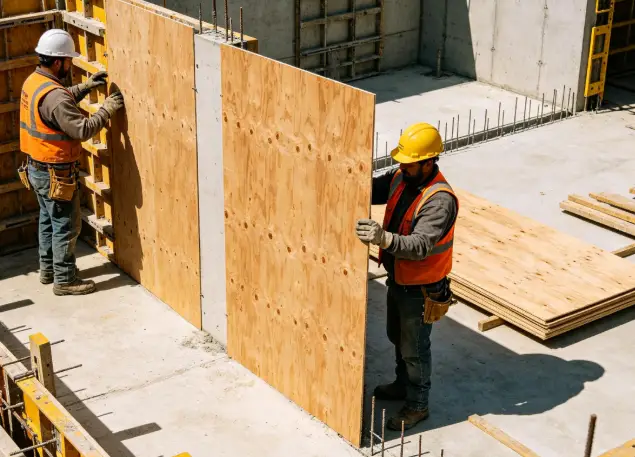
- 18mm / 21mm: Heavy-duty formwork, columns, bridge piers, high concrete pouring pressure
Thicker panels generally offer higher rigidity and better load-bearing performance. For large-area slabs or high concrete pressure areas, 18mm and 21mm are more reliable choices.
| Parameter | Details |
|---|---|
| Product Type | Film Faced Formwork Plywood (Grade 1) |
| Standard Sizes | 1830×915mm, 1830×1220mm, 2440×1220mm |
| Thickness Range | 9mm, 11mm, 12mm, 15mm, 18mm |
| Core Material | Full-core pine veneer |
| Glue Type | WBP Phenolic Resin |
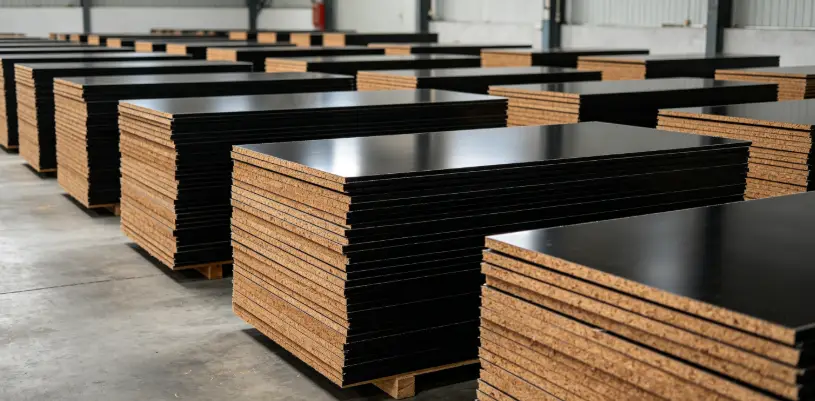
| Surface Film | Black phenolic film (220g/m², double-sided) |
| Reuse Cycles | 15+ times (proper maintenance) |
| Thickness Tolerance | ±0.5mm |
| Certification | ISO 9001 |
3. Check Glue Type for Waterproof Performance
For outdoor and humid construction sites, WBP phenolic glue is the standard. It passes 72-hour boiling water tests, maintains bonding strength in wet conditions, and prevents delamination during repeated use.
This is especially important for projects in tropical regions such as Vietnam, Malaysia and Indonesia, where high humidity and frequent rain can weaken low-quality plywood quickly.
4. Choose the Right Sheet Size
- 1220×2440mm (4’×8’): Global standard, easy to cut and install
- 1830×915mm: Popular in Southeast Asia, fits modular formwork systems
The right sheet size depends on your local market habits and formwork design. Standard sizes are easier to transport, cut and replace, while non-standard sizes may require custom production.
Conclusion
Choosing the right film faced plywood means balancing grade, thickness, glue type and sheet size. By matching the product to your project requirements, you can achieve better concrete finishes, longer panel life and lower overall construction costs.
Still unsure which specification fits your project? Contact Dayang Wood for a free recommendation and factory-direct quote tailored to your construction needs.
